
Wapanacomoco: The Country of the East
Drew Shuptar-Rayvis, Black Corn
Cultural Ambassador, Pocomoke Indian Nation of Maryland

The peaceful ebb and crash of waves breaking upon the shore and wind rustling the great feathery expanses of marsh grass is punctuated by the hammering of the red headed pileated woodpecker in a hardwood forest, his primordial avian laugh echoing among the trees. The perpetual sea breeze sweeps inland, so even the scent of corn ripening in a hot, dry, autumn field is laced with a delicate blush of brine.
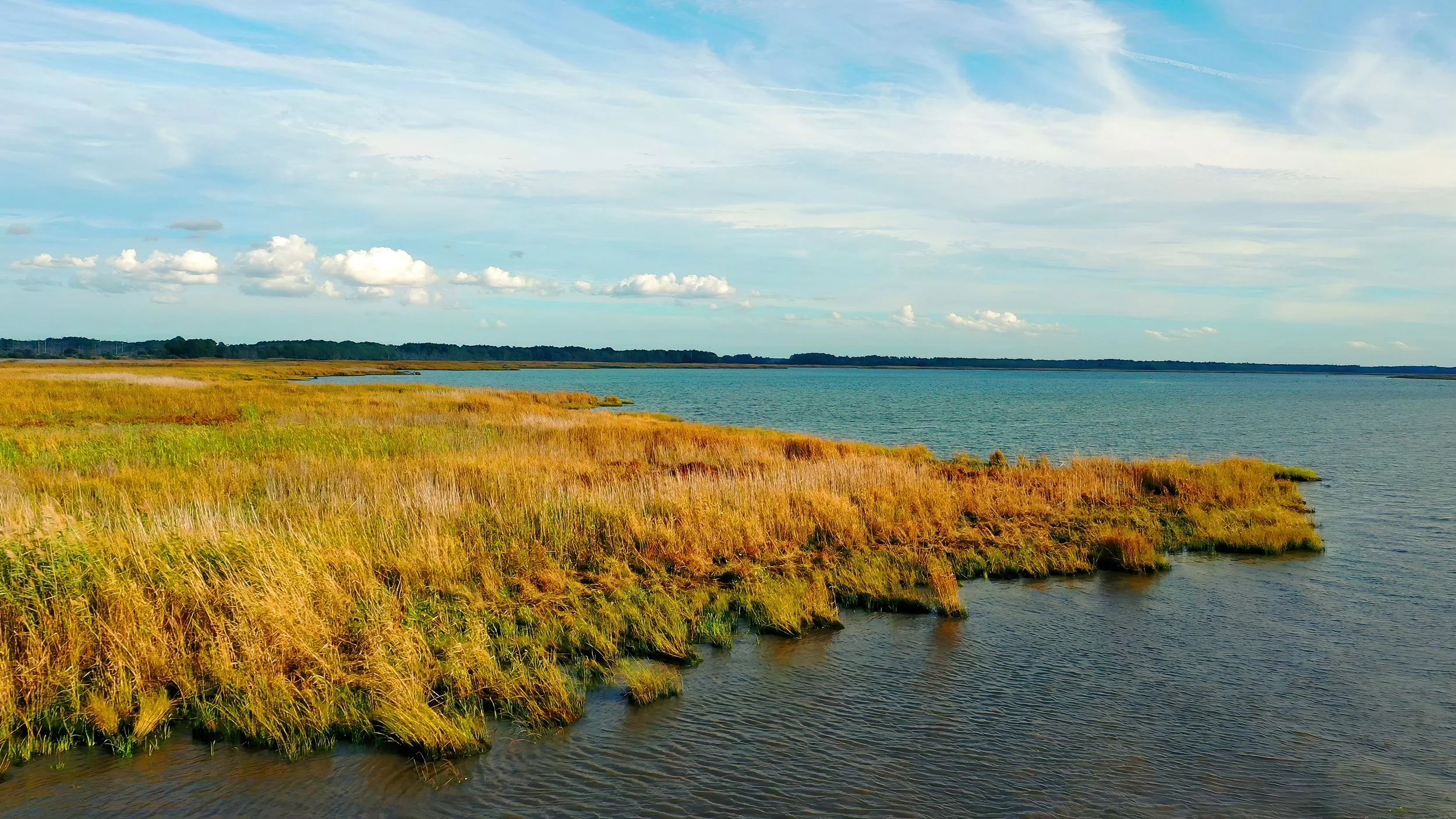
Nanticoke River
This is the Wapanacomoco, “the country of the east.” It is a land of great rivers: “Na keitch pamptuckquahkacomoco” Potomac, Rappahannock, Choptank, Pocomoke, Nanticoke, Susquehanna, just to name a few. It is a land of mountains, rolling hills of hardwood forests, grasslands, meadows, marshlands, flush with deer, bear, turkey and other game. It is a land of streams, cypress swamps, tidal waters and bays all teeming with every sort of fish and shellfish, oyster, blue crab, and quahog. This immense diversity of biomes, rich in food and resources, cradled uncounted nations. Many of these nations are still with us today, such as the Pocomoke, Lenape, Haudenosaunee, Assateague, Choptank, Nanticoke, Piscataway, Pamunkey, Rappahannock, Mattaponi, Chickahominy; while others are no more.
For thousands of years, indigenous villages dotted the landscape. Families heated their bark and cattail mat-covered wigwams and Machakamack (big houses/Algonkian longhouses) with central fires for light and cooking. Vast horticultural fields of corn, beans, squashes, and tobacco grew around the villages, so many different kinds of plants that their varieties were as vast as the colors of fall. The people were handsome, strong, and healthy from the diet of the land, water, and constant activity. The men were our hunters, warriors, and farmers in old age. Fathers, uncles, brothers, and grandfathers were the workers of wood and stone. Women were our primary gardeners, cooks, clothiers, potters, basket makers, medicine makers, mothers, aunts, sisters and grandmothers. Clothing was highly individualized with patterns and artistic expressions unique to either the wearer or the crafter of the item; men and women practiced their leather painting, beading, weaving, bead making, carving and other arts through the winter. Grooming and presentation were valued, men and women bathing daily and carefully removing excess body hair, oiling, plaiting, shaving, and adorning their hair. Bright colors of paint indicated social intentions, status, and accented beauty. Children, boys, and girls of all ages from the smallest infant to the blossoming teen, roamed through their village, learning, playing, growing watched over by networks of kinship. The villages were typically situated near the freshwater rivers, and they were filled with life, music, laughter, dancing, learning, spirituality, love, joys, and sorrows. All things were measured in time with the turning moon, the changing seasons, the growth of the plants and the movements of the abundant animal life. Here we’re a people blessed by Creator and the good spirits that love the human beings, living without insatiable want, all having a place and role in society.
“All things were measured in time with the turning moon, the changing seasons, the growth of the plants and the movements of the abundant animal life.”
However, this rhythmic way of life, was not to last forever. Great floating islands constructed of wood and cloth arrived from lands unknown, bringing strange new men, with faces, skins, hair, beards, clothing, and languages so foreign that they seemed as if from another world--indeed in some ways, they were. These men brought many things to our ancestors, things they had never seen before, some wondrous and some awful. We tried to live in peace with these new people. At first, they desired only to trade, but they too became comfortable here and fell in love with this land. They wished to stay and bring their families to share the land with us. The first to build homes, forts and settlements often tried to keep their word, a promise of peace and friendship, though there were always those whose intentions were to take. A generation passed in this way, as neighbors, but the children of this new people grew hungry, in part because of the European way of inheritance, where the whole of a family’s wealth was given only to the eldest son and the others were left to find fortune alone, wanting more and more Algonkian land. These hungry sons reasoned that it was the will of their god that the Indians sickened with smallpox and died in great numbers; they believed that their god did not like that the Indians did not believe the same beliefs and wanted them removed from the land. Some of the chiefs and councils believed we could control the influx, maybe even become great brothers and allies of these new people, by building strong alliances with European powers, though this worked for a time, it was not to be forever.
Many wars ensued, many people died, many treaties were made and broken, and many people were removed from their ancestral lands, forced to live far away, in new ways and among different nations. However, once a plant has become established in a garden, its seed is very difficult if not impossible to fully remove. So, we remain. Many of our people did not leave, making the heavy choice to stay, living on small farms, homesteads on the edges of society so as not to part with the bones of our ancestors or the homelands, waterways and marshlands that define and shape us.
“Change is never without its struggles and sacrifices, but we are now reclaiming parts of our culture that we sacrificed to survive.”
This project stands testament of our survival as Eastern Woodland People. We are a blended people now, mixed with the blood of many people from many different nations and origins from all over the globe. We became farmers, waterman, iron workers, stone and brick mason’s, carpenters, whittlers, farm laborers. Many chose to become Christians to become part of the larger colonial and later American world. We continued to evolve as the corn does, to adapt to our new surroundings and provide sustenance and growth for our people. Change is never without its struggles and sacrifices, but we are now reclaiming parts of our culture that we sacrificed to survive. We as Eastern woodland descendants refuse to submit and happily raise our voices and lift our heads toward the sun and give honor to the heritage and culture we inherited and live in.
This essay has been financed in part by Eastern Shore Heritage, Inc. with State funds from the Maryland Heritage Areas Authority, an instrumentality of the State of Maryland. However, project contents or opinions do not necessarily reflect the views or policies of the Maryland Heritage Areas Authority.